
When creative freedom is seen as a threat to political power
Source: The Standard
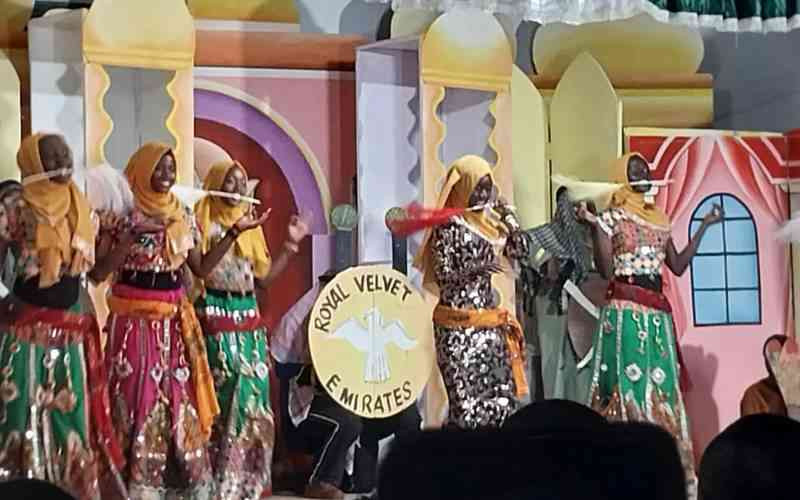
On Friday, March 21, 2025, at the Goethe-Institut Nairobi, a team of thespians led the audience in a public reading ofParliament of Owls, a play by my friend Adipo Sidang’. Exactly a week later, in the company of Sidang’ and rapper Juliani at the University of Nairobi’s Taifa Hall, I sat through a two-hour lecture titledWe Are Not Mentally Ill: Deconstructing the Mad Genius Trope in Literature, by former serviceman, literature and law scholar Professor Peter Wasamba.Not long afterwards, at the school-hosted drama and film festival in Nakuru, Kenya witnessed aState-ordered banon a play.Echoes of War,written and directed by former Kakamega Senator Cleophas Malala, was barred from performance.Armed police officers, reportedly drawn from Nairobi and Kiambu counties, stormed Melvine Jones Academy, the host school, on the fourth day of last year’s National Drama and Film Festival, seeking to prevent students from Butere Girls High School from staging the work.Follow The Standard
channel
on WhatsAppMalala was arrested as a crowd joined the students in chants of defiance; and widespread condemnation followed, decrying the State’s blunt attempt to curtail the free enjoyment of artistic expression.What unfolded in Nakuru was hardly unprecedented. In the late 1970s, at Kamirithu in present-day Kiambu County, security agents disrupted performances ofI Will Marry When I Want, co-authored by Ngugi wa Thiong’o. He was subsequently detained and driven into exile. Decades later, in 2000, during a visit home from the United States, Ngugi and his wife were assaulted at a Nairobi hotel, with suspicion inevitably falling on the State.This pattern recurs. For his songWajinga Nyinyi,poet and musician King Kaka once attracted fierce hostility from the political class, despite the song’s creation and release bearing no link to any personal political dispute.More broadly, the Kenyan State resembles many governments worldwide in its congenital fear of an enlightened public. Those in power, subtly, preside over the disenlightenment of society for political convenience. Such efforts are marked by a persistent tendency to trivialise the role of art, its mastery and free exploration.History offers sobering parallels. In Inquisition-era Europe, artists were targeted for heresy and “alien ideas”. Similar atmospheres prevailed in the Soviet bloc and in apartheid South Africa. Even recently, in war-scarred Gaza, Israeli security agents raided a public library, arresting its proprietors and confiscating books.Why would power fear creativity? Because art is inherently disruptive. In creating and circulating art, artists convert audiences to unfamiliar ways of thinking. Yet societies that embrace artistic vibrancy cultivate thinkers, and thinkers are indispensable to progress.Baraza is a Nairobi-based novelistFollow The Standard
channel
on WhatsApp
Not long afterwards, at the school-hosted drama and film festival in Nakuru, Kenya witnessed aState-ordered banon a play.Echoes of War,written and directed by former Kakamega Senator Cleophas Malala, was barred from performance.Armed police officers, reportedly drawn from Nairobi and Kiambu counties, stormed Melvine Jones Academy, the host school, on the fourth day of last year’s National Drama and Film Festival, seeking to prevent students from Butere Girls High School from staging the work.Follow The Standard
channel
on WhatsAppMalala was arrested as a crowd joined the students in chants of defiance; and widespread condemnation followed, decrying the State’s blunt attempt to curtail the free enjoyment of artistic expression.What unfolded in Nakuru was hardly unprecedented. In the late 1970s, at Kamirithu in present-day Kiambu County, security agents disrupted performances ofI Will Marry When I Want, co-authored by Ngugi wa Thiong’o. He was subsequently detained and driven into exile. Decades later, in 2000, during a visit home from the United States, Ngugi and his wife were assaulted at a Nairobi hotel, with suspicion inevitably falling on the State.This pattern recurs. For his songWajinga Nyinyi,poet and musician King Kaka once attracted fierce hostility from the political class, despite the song’s creation and release bearing no link to any personal political dispute.More broadly, the Kenyan State resembles many governments worldwide in its congenital fear of an enlightened public. Those in power, subtly, preside over the disenlightenment of society for political convenience. Such efforts are marked by a persistent tendency to trivialise the role of art, its mastery and free exploration.History offers sobering parallels. In Inquisition-era Europe, artists were targeted for heresy and “alien ideas”. Similar atmospheres prevailed in the Soviet bloc and in apartheid South Africa. Even recently, in war-scarred Gaza, Israeli security agents raided a public library, arresting its proprietors and confiscating books.Why would power fear creativity? Because art is inherently disruptive. In creating and circulating art, artists convert audiences to unfamiliar ways of thinking. Yet societies that embrace artistic vibrancy cultivate thinkers, and thinkers are indispensable to progress.Baraza is a Nairobi-based novelistFollow The Standard
channel
on WhatsApp
Armed police officers, reportedly drawn from Nairobi and Kiambu counties, stormed Melvine Jones Academy, the host school, on the fourth day of last year’s National Drama and Film Festival, seeking to prevent students from Butere Girls High School from staging the work.Follow The Standard
channel
on WhatsAppMalala was arrested as a crowd joined the students in chants of defiance; and widespread condemnation followed, decrying the State’s blunt attempt to curtail the free enjoyment of artistic expression.What unfolded in Nakuru was hardly unprecedented. In the late 1970s, at Kamirithu in present-day Kiambu County, security agents disrupted performances ofI Will Marry When I Want, co-authored by Ngugi wa Thiong’o. He was subsequently detained and driven into exile. Decades later, in 2000, during a visit home from the United States, Ngugi and his wife were assaulted at a Nairobi hotel, with suspicion inevitably falling on the State.This pattern recurs. For his songWajinga Nyinyi,poet and musician King Kaka once attracted fierce hostility from the political class, despite the song’s creation and release bearing no link to any personal political dispute.More broadly, the Kenyan State resembles many governments worldwide in its congenital fear of an enlightened public. Those in power, subtly, preside over the disenlightenment of society for political convenience. Such efforts are marked by a persistent tendency to trivialise the role of art, its mastery and free exploration.History offers sobering parallels. In Inquisition-era Europe, artists were targeted for heresy and “alien ideas”. Similar atmospheres prevailed in the Soviet bloc and in apartheid South Africa. Even recently, in war-scarred Gaza, Israeli security agents raided a public library, arresting its proprietors and confiscating books.Why would power fear creativity? Because art is inherently disruptive. In creating and circulating art, artists convert audiences to unfamiliar ways of thinking. Yet societies that embrace artistic vibrancy cultivate thinkers, and thinkers are indispensable to progress.Baraza is a Nairobi-based novelistFollow The Standard
channel
on WhatsApp
Follow The Standard
channel
on WhatsAppMalala was arrested as a crowd joined the students in chants of defiance; and widespread condemnation followed, decrying the State’s blunt attempt to curtail the free enjoyment of artistic expression.What unfolded in Nakuru was hardly unprecedented. In the late 1970s, at Kamirithu in present-day Kiambu County, security agents disrupted performances ofI Will Marry When I Want, co-authored by Ngugi wa Thiong’o. He was subsequently detained and driven into exile. Decades later, in 2000, during a visit home from the United States, Ngugi and his wife were assaulted at a Nairobi hotel, with suspicion inevitably falling on the State.This pattern recurs. For his songWajinga Nyinyi,poet and musician King Kaka once attracted fierce hostility from the political class, despite the song’s creation and release bearing no link to any personal political dispute.More broadly, the Kenyan State resembles many governments worldwide in its congenital fear of an enlightened public. Those in power, subtly, preside over the disenlightenment of society for political convenience. Such efforts are marked by a persistent tendency to trivialise the role of art, its mastery and free exploration.History offers sobering parallels. In Inquisition-era Europe, artists were targeted for heresy and “alien ideas”. Similar atmospheres prevailed in the Soviet bloc and in apartheid South Africa. Even recently, in war-scarred Gaza, Israeli security agents raided a public library, arresting its proprietors and confiscating books.Why would power fear creativity? Because art is inherently disruptive. In creating and circulating art, artists convert audiences to unfamiliar ways of thinking. Yet societies that embrace artistic vibrancy cultivate thinkers, and thinkers are indispensable to progress.Baraza is a Nairobi-based novelistFollow The Standard
channel
on WhatsApp
Malala was arrested as a crowd joined the students in chants of defiance; and widespread condemnation followed, decrying the State’s blunt attempt to curtail the free enjoyment of artistic expression.What unfolded in Nakuru was hardly unprecedented. In the late 1970s, at Kamirithu in present-day Kiambu County, security agents disrupted performances ofI Will Marry When I Want, co-authored by Ngugi wa Thiong’o. He was subsequently detained and driven into exile. Decades later, in 2000, during a visit home from the United States, Ngugi and his wife were assaulted at a Nairobi hotel, with suspicion inevitably falling on the State.This pattern recurs. For his songWajinga Nyinyi,poet and musician King Kaka once attracted fierce hostility from the political class, despite the song’s creation and release bearing no link to any personal political dispute.More broadly, the Kenyan State resembles many governments worldwide in its congenital fear of an enlightened public. Those in power, subtly, preside over the disenlightenment of society for political convenience. Such efforts are marked by a persistent tendency to trivialise the role of art, its mastery and free exploration.History offers sobering parallels. In Inquisition-era Europe, artists were targeted for heresy and “alien ideas”. Similar atmospheres prevailed in the Soviet bloc and in apartheid South Africa. Even recently, in war-scarred Gaza, Israeli security agents raided a public library, arresting its proprietors and confiscating books.Why would power fear creativity? Because art is inherently disruptive. In creating and circulating art, artists convert audiences to unfamiliar ways of thinking. Yet societies that embrace artistic vibrancy cultivate thinkers, and thinkers are indispensable to progress.Baraza is a Nairobi-based novelistFollow The Standard
channel
on WhatsApp
What unfolded in Nakuru was hardly unprecedented. In the late 1970s, at Kamirithu in present-day Kiambu County, security agents disrupted performances ofI Will Marry When I Want, co-authored by Ngugi wa Thiong’o. He was subsequently detained and driven into exile. Decades later, in 2000, during a visit home from the United States, Ngugi and his wife were assaulted at a Nairobi hotel, with suspicion inevitably falling on the State.This pattern recurs. For his songWajinga Nyinyi,poet and musician King Kaka once attracted fierce hostility from the political class, despite the song’s creation and release bearing no link to any personal political dispute.More broadly, the Kenyan State resembles many governments worldwide in its congenital fear of an enlightened public. Those in power, subtly, preside over the disenlightenment of society for political convenience. Such efforts are marked by a persistent tendency to trivialise the role of art, its mastery and free exploration.History offers sobering parallels. In Inquisition-era Europe, artists were targeted for heresy and “alien ideas”. Similar atmospheres prevailed in the Soviet bloc and in apartheid South Africa. Even recently, in war-scarred Gaza, Israeli security agents raided a public library, arresting its proprietors and confiscating books.Why would power fear creativity? Because art is inherently disruptive. In creating and circulating art, artists convert audiences to unfamiliar ways of thinking. Yet societies that embrace artistic vibrancy cultivate thinkers, and thinkers are indispensable to progress.Baraza is a Nairobi-based novelistFollow The Standard
channel
on WhatsApp
This pattern recurs. For his songWajinga Nyinyi,poet and musician King Kaka once attracted fierce hostility from the political class, despite the song’s creation and release bearing no link to any personal political dispute.More broadly, the Kenyan State resembles many governments worldwide in its congenital fear of an enlightened public. Those in power, subtly, preside over the disenlightenment of society for political convenience. Such efforts are marked by a persistent tendency to trivialise the role of art, its mastery and free exploration.History offers sobering parallels. In Inquisition-era Europe, artists were targeted for heresy and “alien ideas”. Similar atmospheres prevailed in the Soviet bloc and in apartheid South Africa. Even recently, in war-scarred Gaza, Israeli security agents raided a public library, arresting its proprietors and confiscating books.Why would power fear creativity? Because art is inherently disruptive. In creating and circulating art, artists convert audiences to unfamiliar ways of thinking. Yet societies that embrace artistic vibrancy cultivate thinkers, and thinkers are indispensable to progress.Baraza is a Nairobi-based novelistFollow The Standard
channel
on WhatsApp
More broadly, the Kenyan State resembles many governments worldwide in its congenital fear of an enlightened public. Those in power, subtly, preside over the disenlightenment of society for political convenience. Such efforts are marked by a persistent tendency to trivialise the role of art, its mastery and free exploration.History offers sobering parallels. In Inquisition-era Europe, artists were targeted for heresy and “alien ideas”. Similar atmospheres prevailed in the Soviet bloc and in apartheid South Africa. Even recently, in war-scarred Gaza, Israeli security agents raided a public library, arresting its proprietors and confiscating books.Why would power fear creativity? Because art is inherently disruptive. In creating and circulating art, artists convert audiences to unfamiliar ways of thinking. Yet societies that embrace artistic vibrancy cultivate thinkers, and thinkers are indispensable to progress.Baraza is a Nairobi-based novelistFollow The Standard
channel
on WhatsApp
History offers sobering parallels. In Inquisition-era Europe, artists were targeted for heresy and “alien ideas”. Similar atmospheres prevailed in the Soviet bloc and in apartheid South Africa. Even recently, in war-scarred Gaza, Israeli security agents raided a public library, arresting its proprietors and confiscating books.Why would power fear creativity? Because art is inherently disruptive. In creating and circulating art, artists convert audiences to unfamiliar ways of thinking. Yet societies that embrace artistic vibrancy cultivate thinkers, and thinkers are indispensable to progress.Baraza is a Nairobi-based novelistFollow The Standard
channel
on WhatsApp
Why would power fear creativity? Because art is inherently disruptive. In creating and circulating art, artists convert audiences to unfamiliar ways of thinking. Yet societies that embrace artistic vibrancy cultivate thinkers, and thinkers are indispensable to progress.Baraza is a Nairobi-based novelistFollow The Standard
channel
on WhatsApp
Baraza is a Nairobi-based novelistFollow The Standard
channel
on WhatsApp
Subscribe to our newsletter and stay updated on the latest developments and special
offers!
Pick your favourite topics below for a tailor made homepage just for you