
Murkomen warns drug barons as government intensifies crackdown
Source: The Standard
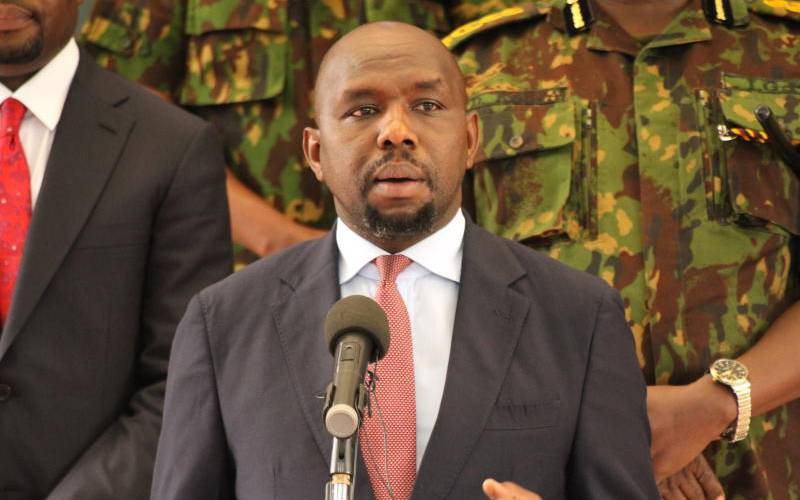
Interior Cabinet Secretary Kipchumba Murkomen has warned individuals involved in thedistribution of illicit drugsand adulterated ethanol.The CS said the government is stepping up efforts to combat alcohol and substance abuse across the country.Speaking on Saturday, Murkomen noted that 2026 will be a defining year in the fight against drug and substance abuse, warning that criminal networks behind the trade would face sustained and coordinated law enforcement action.“This is the year we are liberating our youth from the yoke of drug and substance abuse,” Murkomen said, adding that authorities will focus on dismantling syndicates involved in the sale of illicit drugs and adulterated alcohol that continue to endanger lives and undermine national development.Follow The Standard
channel
on WhatsAppAlcohol and substance abuse has in recent years emerged as a major public health and security concern, particularly among young people.Cases of deaths and hospitalisations linked to toxic brews and hard drugs have been reported in several counties, prompting renewed calls for tougher enforcement and preventive measures.Murkomen said he is scheduled to meet Inspector General of Police Douglas Kanja next week to discuss theoperationalisation of a directiveissued by President William Ruto to strengthen the Anti-Narcotics Unit.The directive, announced during the President’s New Year address, includes plans to recruit an additional 500 officers to boost capacity.The Interior CS said the government views alcohol and substance abuse as a major impediment to national development due to its impact on the country’s most productive population.“There is no country that can achieve first-world status when its most productive population is trapped in alcohol and substance abuse,” Murkomen said.Under government plans outlined by President Ruto, the Anti-Narcotics Unit within the Directorate of Criminal Investigations (DCI) is set to be significantly expanded.Personnel numbers are expected to increase from about 200 to 700 officers, alongside enhanced surveillance, intelligence, forensic and financial investigation capabilities.The President said the strengthened unit will focus on investigating high-level drug trafficking and illicit alcohol networks, as well as asset tracing, seizure and forfeiture.He noted that assets recovered through such operations will be redirected to rehabilitation, prevention and treatment programmes.Murkomen also called on county governments to play a more active role in addressing addiction, urging each county to establish at least one rehabilitation centre to support treatment, recovery and reintegration of affected individuals.Stay informed. Subscribe to our newsletterBy clicking on theSIGN UPbutton, you agree to ourTerms & Conditionsand thePrivacy PolicySIGN UPIn his New Year address delivered from Eldoret State Lodge on December 31, President Rutodeclared alcohol and drugabuse a national emergency, citing its impact on public health, national security, productivity and social stability.Stay Informed, Stay Empowered: Download the Standard ePaper App!“This crisis demands decisive national action,” Ruto said, noting that statistics indicate a significant proportion of Kenyans aged between 15 and 65 use at least one substance of abuse, with harmful use often beginning at a young age.Follow The Standard
channel
on WhatsApp
The CS said the government is stepping up efforts to combat alcohol and substance abuse across the country.Speaking on Saturday, Murkomen noted that 2026 will be a defining year in the fight against drug and substance abuse, warning that criminal networks behind the trade would face sustained and coordinated law enforcement action.“This is the year we are liberating our youth from the yoke of drug and substance abuse,” Murkomen said, adding that authorities will focus on dismantling syndicates involved in the sale of illicit drugs and adulterated alcohol that continue to endanger lives and undermine national development.Follow The Standard
channel
on WhatsAppAlcohol and substance abuse has in recent years emerged as a major public health and security concern, particularly among young people.Cases of deaths and hospitalisations linked to toxic brews and hard drugs have been reported in several counties, prompting renewed calls for tougher enforcement and preventive measures.Murkomen said he is scheduled to meet Inspector General of Police Douglas Kanja next week to discuss theoperationalisation of a directiveissued by President William Ruto to strengthen the Anti-Narcotics Unit.The directive, announced during the President’s New Year address, includes plans to recruit an additional 500 officers to boost capacity.The Interior CS said the government views alcohol and substance abuse as a major impediment to national development due to its impact on the country’s most productive population.“There is no country that can achieve first-world status when its most productive population is trapped in alcohol and substance abuse,” Murkomen said.Under government plans outlined by President Ruto, the Anti-Narcotics Unit within the Directorate of Criminal Investigations (DCI) is set to be significantly expanded.Personnel numbers are expected to increase from about 200 to 700 officers, alongside enhanced surveillance, intelligence, forensic and financial investigation capabilities.The President said the strengthened unit will focus on investigating high-level drug trafficking and illicit alcohol networks, as well as asset tracing, seizure and forfeiture.He noted that assets recovered through such operations will be redirected to rehabilitation, prevention and treatment programmes.Murkomen also called on county governments to play a more active role in addressing addiction, urging each county to establish at least one rehabilitation centre to support treatment, recovery and reintegration of affected individuals.Stay informed. Subscribe to our newsletterBy clicking on theSIGN UPbutton, you agree to ourTerms & Conditionsand thePrivacy PolicySIGN UPIn his New Year address delivered from Eldoret State Lodge on December 31, President Rutodeclared alcohol and drugabuse a national emergency, citing its impact on public health, national security, productivity and social stability.Stay Informed, Stay Empowered: Download the Standard ePaper App!“This crisis demands decisive national action,” Ruto said, noting that statistics indicate a significant proportion of Kenyans aged between 15 and 65 use at least one substance of abuse, with harmful use often beginning at a young age.Follow The Standard
channel
on WhatsApp
Speaking on Saturday, Murkomen noted that 2026 will be a defining year in the fight against drug and substance abuse, warning that criminal networks behind the trade would face sustained and coordinated law enforcement action.“This is the year we are liberating our youth from the yoke of drug and substance abuse,” Murkomen said, adding that authorities will focus on dismantling syndicates involved in the sale of illicit drugs and adulterated alcohol that continue to endanger lives and undermine national development.Follow The Standard
channel
on WhatsAppAlcohol and substance abuse has in recent years emerged as a major public health and security concern, particularly among young people.Cases of deaths and hospitalisations linked to toxic brews and hard drugs have been reported in several counties, prompting renewed calls for tougher enforcement and preventive measures.Murkomen said he is scheduled to meet Inspector General of Police Douglas Kanja next week to discuss theoperationalisation of a directiveissued by President William Ruto to strengthen the Anti-Narcotics Unit.The directive, announced during the President’s New Year address, includes plans to recruit an additional 500 officers to boost capacity.The Interior CS said the government views alcohol and substance abuse as a major impediment to national development due to its impact on the country’s most productive population.“There is no country that can achieve first-world status when its most productive population is trapped in alcohol and substance abuse,” Murkomen said.Under government plans outlined by President Ruto, the Anti-Narcotics Unit within the Directorate of Criminal Investigations (DCI) is set to be significantly expanded.Personnel numbers are expected to increase from about 200 to 700 officers, alongside enhanced surveillance, intelligence, forensic and financial investigation capabilities.The President said the strengthened unit will focus on investigating high-level drug trafficking and illicit alcohol networks, as well as asset tracing, seizure and forfeiture.He noted that assets recovered through such operations will be redirected to rehabilitation, prevention and treatment programmes.Murkomen also called on county governments to play a more active role in addressing addiction, urging each county to establish at least one rehabilitation centre to support treatment, recovery and reintegration of affected individuals.Stay informed. Subscribe to our newsletterBy clicking on theSIGN UPbutton, you agree to ourTerms & Conditionsand thePrivacy PolicySIGN UPIn his New Year address delivered from Eldoret State Lodge on December 31, President Rutodeclared alcohol and drugabuse a national emergency, citing its impact on public health, national security, productivity and social stability.Stay Informed, Stay Empowered: Download the Standard ePaper App!“This crisis demands decisive national action,” Ruto said, noting that statistics indicate a significant proportion of Kenyans aged between 15 and 65 use at least one substance of abuse, with harmful use often beginning at a young age.Follow The Standard
channel
on WhatsApp
“This is the year we are liberating our youth from the yoke of drug and substance abuse,” Murkomen said, adding that authorities will focus on dismantling syndicates involved in the sale of illicit drugs and adulterated alcohol that continue to endanger lives and undermine national development.Follow The Standard
channel
on WhatsAppAlcohol and substance abuse has in recent years emerged as a major public health and security concern, particularly among young people.Cases of deaths and hospitalisations linked to toxic brews and hard drugs have been reported in several counties, prompting renewed calls for tougher enforcement and preventive measures.Murkomen said he is scheduled to meet Inspector General of Police Douglas Kanja next week to discuss theoperationalisation of a directiveissued by President William Ruto to strengthen the Anti-Narcotics Unit.The directive, announced during the President’s New Year address, includes plans to recruit an additional 500 officers to boost capacity.The Interior CS said the government views alcohol and substance abuse as a major impediment to national development due to its impact on the country’s most productive population.“There is no country that can achieve first-world status when its most productive population is trapped in alcohol and substance abuse,” Murkomen said.Under government plans outlined by President Ruto, the Anti-Narcotics Unit within the Directorate of Criminal Investigations (DCI) is set to be significantly expanded.Personnel numbers are expected to increase from about 200 to 700 officers, alongside enhanced surveillance, intelligence, forensic and financial investigation capabilities.The President said the strengthened unit will focus on investigating high-level drug trafficking and illicit alcohol networks, as well as asset tracing, seizure and forfeiture.He noted that assets recovered through such operations will be redirected to rehabilitation, prevention and treatment programmes.Murkomen also called on county governments to play a more active role in addressing addiction, urging each county to establish at least one rehabilitation centre to support treatment, recovery and reintegration of affected individuals.Stay informed. Subscribe to our newsletterBy clicking on theSIGN UPbutton, you agree to ourTerms & Conditionsand thePrivacy PolicySIGN UPIn his New Year address delivered from Eldoret State Lodge on December 31, President Rutodeclared alcohol and drugabuse a national emergency, citing its impact on public health, national security, productivity and social stability.Stay Informed, Stay Empowered: Download the Standard ePaper App!“This crisis demands decisive national action,” Ruto said, noting that statistics indicate a significant proportion of Kenyans aged between 15 and 65 use at least one substance of abuse, with harmful use often beginning at a young age.Follow The Standard
channel
on WhatsApp
Alcohol and substance abuse has in recent years emerged as a major public health and security concern, particularly among young people.Cases of deaths and hospitalisations linked to toxic brews and hard drugs have been reported in several counties, prompting renewed calls for tougher enforcement and preventive measures.Murkomen said he is scheduled to meet Inspector General of Police Douglas Kanja next week to discuss theoperationalisation of a directiveissued by President William Ruto to strengthen the Anti-Narcotics Unit.The directive, announced during the President’s New Year address, includes plans to recruit an additional 500 officers to boost capacity.The Interior CS said the government views alcohol and substance abuse as a major impediment to national development due to its impact on the country’s most productive population.“There is no country that can achieve first-world status when its most productive population is trapped in alcohol and substance abuse,” Murkomen said.Under government plans outlined by President Ruto, the Anti-Narcotics Unit within the Directorate of Criminal Investigations (DCI) is set to be significantly expanded.Personnel numbers are expected to increase from about 200 to 700 officers, alongside enhanced surveillance, intelligence, forensic and financial investigation capabilities.The President said the strengthened unit will focus on investigating high-level drug trafficking and illicit alcohol networks, as well as asset tracing, seizure and forfeiture.He noted that assets recovered through such operations will be redirected to rehabilitation, prevention and treatment programmes.Murkomen also called on county governments to play a more active role in addressing addiction, urging each county to establish at least one rehabilitation centre to support treatment, recovery and reintegration of affected individuals.Stay informed. Subscribe to our newsletterBy clicking on theSIGN UPbutton, you agree to ourTerms & Conditionsand thePrivacy PolicySIGN UPIn his New Year address delivered from Eldoret State Lodge on December 31, President Rutodeclared alcohol and drugabuse a national emergency, citing its impact on public health, national security, productivity and social stability.Stay Informed, Stay Empowered: Download the Standard ePaper App!“This crisis demands decisive national action,” Ruto said, noting that statistics indicate a significant proportion of Kenyans aged between 15 and 65 use at least one substance of abuse, with harmful use often beginning at a young age.Follow The Standard
channel
on WhatsApp
Cases of deaths and hospitalisations linked to toxic brews and hard drugs have been reported in several counties, prompting renewed calls for tougher enforcement and preventive measures.Murkomen said he is scheduled to meet Inspector General of Police Douglas Kanja next week to discuss theoperationalisation of a directiveissued by President William Ruto to strengthen the Anti-Narcotics Unit.The directive, announced during the President’s New Year address, includes plans to recruit an additional 500 officers to boost capacity.The Interior CS said the government views alcohol and substance abuse as a major impediment to national development due to its impact on the country’s most productive population.“There is no country that can achieve first-world status when its most productive population is trapped in alcohol and substance abuse,” Murkomen said.Under government plans outlined by President Ruto, the Anti-Narcotics Unit within the Directorate of Criminal Investigations (DCI) is set to be significantly expanded.Personnel numbers are expected to increase from about 200 to 700 officers, alongside enhanced surveillance, intelligence, forensic and financial investigation capabilities.The President said the strengthened unit will focus on investigating high-level drug trafficking and illicit alcohol networks, as well as asset tracing, seizure and forfeiture.He noted that assets recovered through such operations will be redirected to rehabilitation, prevention and treatment programmes.Murkomen also called on county governments to play a more active role in addressing addiction, urging each county to establish at least one rehabilitation centre to support treatment, recovery and reintegration of affected individuals.Stay informed. Subscribe to our newsletterBy clicking on theSIGN UPbutton, you agree to ourTerms & Conditionsand thePrivacy PolicySIGN UPIn his New Year address delivered from Eldoret State Lodge on December 31, President Rutodeclared alcohol and drugabuse a national emergency, citing its impact on public health, national security, productivity and social stability.Stay Informed, Stay Empowered: Download the Standard ePaper App!“This crisis demands decisive national action,” Ruto said, noting that statistics indicate a significant proportion of Kenyans aged between 15 and 65 use at least one substance of abuse, with harmful use often beginning at a young age.Follow The Standard
channel
on WhatsApp
Murkomen said he is scheduled to meet Inspector General of Police Douglas Kanja next week to discuss theoperationalisation of a directiveissued by President William Ruto to strengthen the Anti-Narcotics Unit.The directive, announced during the President’s New Year address, includes plans to recruit an additional 500 officers to boost capacity.The Interior CS said the government views alcohol and substance abuse as a major impediment to national development due to its impact on the country’s most productive population.“There is no country that can achieve first-world status when its most productive population is trapped in alcohol and substance abuse,” Murkomen said.Under government plans outlined by President Ruto, the Anti-Narcotics Unit within the Directorate of Criminal Investigations (DCI) is set to be significantly expanded.Personnel numbers are expected to increase from about 200 to 700 officers, alongside enhanced surveillance, intelligence, forensic and financial investigation capabilities.The President said the strengthened unit will focus on investigating high-level drug trafficking and illicit alcohol networks, as well as asset tracing, seizure and forfeiture.He noted that assets recovered through such operations will be redirected to rehabilitation, prevention and treatment programmes.Murkomen also called on county governments to play a more active role in addressing addiction, urging each county to establish at least one rehabilitation centre to support treatment, recovery and reintegration of affected individuals.Stay informed. Subscribe to our newsletterBy clicking on theSIGN UPbutton, you agree to ourTerms & Conditionsand thePrivacy PolicySIGN UPIn his New Year address delivered from Eldoret State Lodge on December 31, President Rutodeclared alcohol and drugabuse a national emergency, citing its impact on public health, national security, productivity and social stability.Stay Informed, Stay Empowered: Download the Standard ePaper App!“This crisis demands decisive national action,” Ruto said, noting that statistics indicate a significant proportion of Kenyans aged between 15 and 65 use at least one substance of abuse, with harmful use often beginning at a young age.Follow The Standard
channel
on WhatsApp
The directive, announced during the President’s New Year address, includes plans to recruit an additional 500 officers to boost capacity.The Interior CS said the government views alcohol and substance abuse as a major impediment to national development due to its impact on the country’s most productive population.“There is no country that can achieve first-world status when its most productive population is trapped in alcohol and substance abuse,” Murkomen said.Under government plans outlined by President Ruto, the Anti-Narcotics Unit within the Directorate of Criminal Investigations (DCI) is set to be significantly expanded.Personnel numbers are expected to increase from about 200 to 700 officers, alongside enhanced surveillance, intelligence, forensic and financial investigation capabilities.The President said the strengthened unit will focus on investigating high-level drug trafficking and illicit alcohol networks, as well as asset tracing, seizure and forfeiture.He noted that assets recovered through such operations will be redirected to rehabilitation, prevention and treatment programmes.Murkomen also called on county governments to play a more active role in addressing addiction, urging each county to establish at least one rehabilitation centre to support treatment, recovery and reintegration of affected individuals.Stay informed. Subscribe to our newsletterBy clicking on theSIGN UPbutton, you agree to ourTerms & Conditionsand thePrivacy PolicySIGN UPIn his New Year address delivered from Eldoret State Lodge on December 31, President Rutodeclared alcohol and drugabuse a national emergency, citing its impact on public health, national security, productivity and social stability.Stay Informed, Stay Empowered: Download the Standard ePaper App!“This crisis demands decisive national action,” Ruto said, noting that statistics indicate a significant proportion of Kenyans aged between 15 and 65 use at least one substance of abuse, with harmful use often beginning at a young age.Follow The Standard
channel
on WhatsApp
The Interior CS said the government views alcohol and substance abuse as a major impediment to national development due to its impact on the country’s most productive population.“There is no country that can achieve first-world status when its most productive population is trapped in alcohol and substance abuse,” Murkomen said.Under government plans outlined by President Ruto, the Anti-Narcotics Unit within the Directorate of Criminal Investigations (DCI) is set to be significantly expanded.Personnel numbers are expected to increase from about 200 to 700 officers, alongside enhanced surveillance, intelligence, forensic and financial investigation capabilities.The President said the strengthened unit will focus on investigating high-level drug trafficking and illicit alcohol networks, as well as asset tracing, seizure and forfeiture.He noted that assets recovered through such operations will be redirected to rehabilitation, prevention and treatment programmes.Murkomen also called on county governments to play a more active role in addressing addiction, urging each county to establish at least one rehabilitation centre to support treatment, recovery and reintegration of affected individuals.Stay informed. Subscribe to our newsletterBy clicking on theSIGN UPbutton, you agree to ourTerms & Conditionsand thePrivacy PolicySIGN UPIn his New Year address delivered from Eldoret State Lodge on December 31, President Rutodeclared alcohol and drugabuse a national emergency, citing its impact on public health, national security, productivity and social stability.Stay Informed, Stay Empowered: Download the Standard ePaper App!“This crisis demands decisive national action,” Ruto said, noting that statistics indicate a significant proportion of Kenyans aged between 15 and 65 use at least one substance of abuse, with harmful use often beginning at a young age.Follow The Standard
channel
on WhatsApp
“There is no country that can achieve first-world status when its most productive population is trapped in alcohol and substance abuse,” Murkomen said.Under government plans outlined by President Ruto, the Anti-Narcotics Unit within the Directorate of Criminal Investigations (DCI) is set to be significantly expanded.Personnel numbers are expected to increase from about 200 to 700 officers, alongside enhanced surveillance, intelligence, forensic and financial investigation capabilities.The President said the strengthened unit will focus on investigating high-level drug trafficking and illicit alcohol networks, as well as asset tracing, seizure and forfeiture.He noted that assets recovered through such operations will be redirected to rehabilitation, prevention and treatment programmes.Murkomen also called on county governments to play a more active role in addressing addiction, urging each county to establish at least one rehabilitation centre to support treatment, recovery and reintegration of affected individuals.Stay informed. Subscribe to our newsletterBy clicking on theSIGN UPbutton, you agree to ourTerms & Conditionsand thePrivacy PolicySIGN UPIn his New Year address delivered from Eldoret State Lodge on December 31, President Rutodeclared alcohol and drugabuse a national emergency, citing its impact on public health, national security, productivity and social stability.Stay Informed, Stay Empowered: Download the Standard ePaper App!“This crisis demands decisive national action,” Ruto said, noting that statistics indicate a significant proportion of Kenyans aged between 15 and 65 use at least one substance of abuse, with harmful use often beginning at a young age.Follow The Standard
channel
on WhatsApp
Under government plans outlined by President Ruto, the Anti-Narcotics Unit within the Directorate of Criminal Investigations (DCI) is set to be significantly expanded.Personnel numbers are expected to increase from about 200 to 700 officers, alongside enhanced surveillance, intelligence, forensic and financial investigation capabilities.The President said the strengthened unit will focus on investigating high-level drug trafficking and illicit alcohol networks, as well as asset tracing, seizure and forfeiture.He noted that assets recovered through such operations will be redirected to rehabilitation, prevention and treatment programmes.Murkomen also called on county governments to play a more active role in addressing addiction, urging each county to establish at least one rehabilitation centre to support treatment, recovery and reintegration of affected individuals.Stay informed. Subscribe to our newsletterBy clicking on theSIGN UPbutton, you agree to ourTerms & Conditionsand thePrivacy PolicySIGN UPIn his New Year address delivered from Eldoret State Lodge on December 31, President Rutodeclared alcohol and drugabuse a national emergency, citing its impact on public health, national security, productivity and social stability.Stay Informed, Stay Empowered: Download the Standard ePaper App!“This crisis demands decisive national action,” Ruto said, noting that statistics indicate a significant proportion of Kenyans aged between 15 and 65 use at least one substance of abuse, with harmful use often beginning at a young age.Follow The Standard
channel
on WhatsApp
Personnel numbers are expected to increase from about 200 to 700 officers, alongside enhanced surveillance, intelligence, forensic and financial investigation capabilities.The President said the strengthened unit will focus on investigating high-level drug trafficking and illicit alcohol networks, as well as asset tracing, seizure and forfeiture.He noted that assets recovered through such operations will be redirected to rehabilitation, prevention and treatment programmes.Murkomen also called on county governments to play a more active role in addressing addiction, urging each county to establish at least one rehabilitation centre to support treatment, recovery and reintegration of affected individuals.Stay informed. Subscribe to our newsletterBy clicking on theSIGN UPbutton, you agree to ourTerms & Conditionsand thePrivacy PolicySIGN UPIn his New Year address delivered from Eldoret State Lodge on December 31, President Rutodeclared alcohol and drugabuse a national emergency, citing its impact on public health, national security, productivity and social stability.Stay Informed, Stay Empowered: Download the Standard ePaper App!“This crisis demands decisive national action,” Ruto said, noting that statistics indicate a significant proportion of Kenyans aged between 15 and 65 use at least one substance of abuse, with harmful use often beginning at a young age.Follow The Standard
channel
on WhatsApp
The President said the strengthened unit will focus on investigating high-level drug trafficking and illicit alcohol networks, as well as asset tracing, seizure and forfeiture.He noted that assets recovered through such operations will be redirected to rehabilitation, prevention and treatment programmes.Murkomen also called on county governments to play a more active role in addressing addiction, urging each county to establish at least one rehabilitation centre to support treatment, recovery and reintegration of affected individuals.Stay informed. Subscribe to our newsletterBy clicking on theSIGN UPbutton, you agree to ourTerms & Conditionsand thePrivacy PolicySIGN UPIn his New Year address delivered from Eldoret State Lodge on December 31, President Rutodeclared alcohol and drugabuse a national emergency, citing its impact on public health, national security, productivity and social stability.Stay Informed, Stay Empowered: Download the Standard ePaper App!“This crisis demands decisive national action,” Ruto said, noting that statistics indicate a significant proportion of Kenyans aged between 15 and 65 use at least one substance of abuse, with harmful use often beginning at a young age.Follow The Standard
channel
on WhatsApp
He noted that assets recovered through such operations will be redirected to rehabilitation, prevention and treatment programmes.Murkomen also called on county governments to play a more active role in addressing addiction, urging each county to establish at least one rehabilitation centre to support treatment, recovery and reintegration of affected individuals.Stay informed. Subscribe to our newsletterBy clicking on theSIGN UPbutton, you agree to ourTerms & Conditionsand thePrivacy PolicySIGN UPIn his New Year address delivered from Eldoret State Lodge on December 31, President Rutodeclared alcohol and drugabuse a national emergency, citing its impact on public health, national security, productivity and social stability.Stay Informed, Stay Empowered: Download the Standard ePaper App!“This crisis demands decisive national action,” Ruto said, noting that statistics indicate a significant proportion of Kenyans aged between 15 and 65 use at least one substance of abuse, with harmful use often beginning at a young age.Follow The Standard
channel
on WhatsApp
Murkomen also called on county governments to play a more active role in addressing addiction, urging each county to establish at least one rehabilitation centre to support treatment, recovery and reintegration of affected individuals.Stay informed. Subscribe to our newsletterBy clicking on theSIGN UPbutton, you agree to ourTerms & Conditionsand thePrivacy PolicySIGN UPIn his New Year address delivered from Eldoret State Lodge on December 31, President Rutodeclared alcohol and drugabuse a national emergency, citing its impact on public health, national security, productivity and social stability.Stay Informed, Stay Empowered: Download the Standard ePaper App!“This crisis demands decisive national action,” Ruto said, noting that statistics indicate a significant proportion of Kenyans aged between 15 and 65 use at least one substance of abuse, with harmful use often beginning at a young age.Follow The Standard
channel
on WhatsApp
In his New Year address delivered from Eldoret State Lodge on December 31, President Rutodeclared alcohol and drugabuse a national emergency, citing its impact on public health, national security, productivity and social stability.Stay Informed, Stay Empowered: Download the Standard ePaper App!“This crisis demands decisive national action,” Ruto said, noting that statistics indicate a significant proportion of Kenyans aged between 15 and 65 use at least one substance of abuse, with harmful use often beginning at a young age.Follow The Standard
channel
on WhatsApp
“This crisis demands decisive national action,” Ruto said, noting that statistics indicate a significant proportion of Kenyans aged between 15 and 65 use at least one substance of abuse, with harmful use often beginning at a young age.Follow The Standard
channel
on WhatsApp
Subscribe to our newsletter and stay updated on the latest developments and special
offers!
Pick your favourite topics below for a tailor made homepage just for you