
Explainer: Why Military and Police Recruitment Insist on Teeth, Height, and More
Source: Kenyans.co.ke
Height is one of the most visible and debated requirements in military and police recruitment. In Kenya, the Kenya Defence Forces (KDF) generally require male recruits to be at least 1.70 metres and female recruits 1.60 metres. The National Police Service has similar standards. But why is height so important?
In November last year, a man from Baringo drew widespread attention after videos circulated online showing him protesting his exclusion from police recruitment because of his height.
The man, who revealed he had been attempting to join the police service for the past eight years, expressed deep frustration after being turned away once again in the recruitment process.
Taller recruits are considered to have advantages in physical training as longer limbs can improve endurance, running, climbing, and carrying heavy loads, all crucial in operational training.
Height can also make certain drills and formations more efficient, allowing troops to operate in sync during parades or combat maneuvers.
Uniforms, protective gear, and standard-issue rifles are often made for an “average” body size. According to military and fitness experts,taller recruits are more likely to handle equipment comfortably and safely, which can be critical in high-pressure situations.
Research and long-standing military practices indicate that taller soldiers are often seen as more commanding, confident, and intimidating, traits that can strengthen leadership and unit morale. In this sense, height is not only about physical ability but also about how authority is perceived in command situations.
There are exceptions, but in physically demanding units such as infantry or special forces, height can influence initial recruitment decisions. Recruits who do not meet height standards may still qualify for specialised roles that rely on skill, intelligence, or technology rather than brute strength.
Even so, critics arguethat strict height requirements are unfair as they can exclude capable recruitswho may excel in other areas, particularly in modern militaries where agility, strategy, and technical ability are increasingly valued.
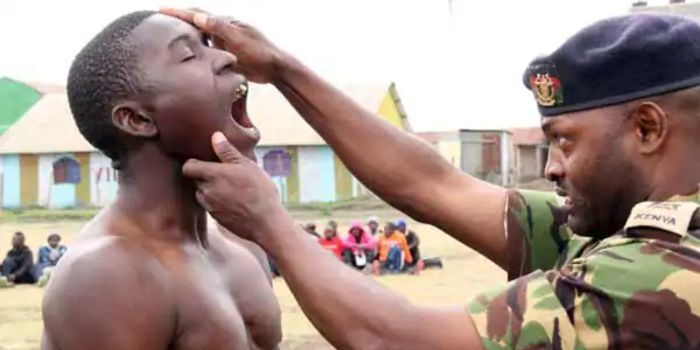
During recruitments, its is common to see candidates being asked to open their mouths for a physical examination. Dental health ensures recruits can eat, speak, and avoid infections that may hinder field performance.
At the same time, vision tests, including color blindness checks, are crucial for shooting, driving, and operating equipment. Tattoos and body markings, on the other hand, are assessed for discipline, image, and unit cohesion.
Psychologicalevaluations screen for stress resilience, emotional stability, and decision-makingunder pressure. All together, these standards aim to ensure recruits are physically, mentally, and operationally ready for the demands of military and police service.