
Crisis as drought drives wildlife into farms
Source: The Standard
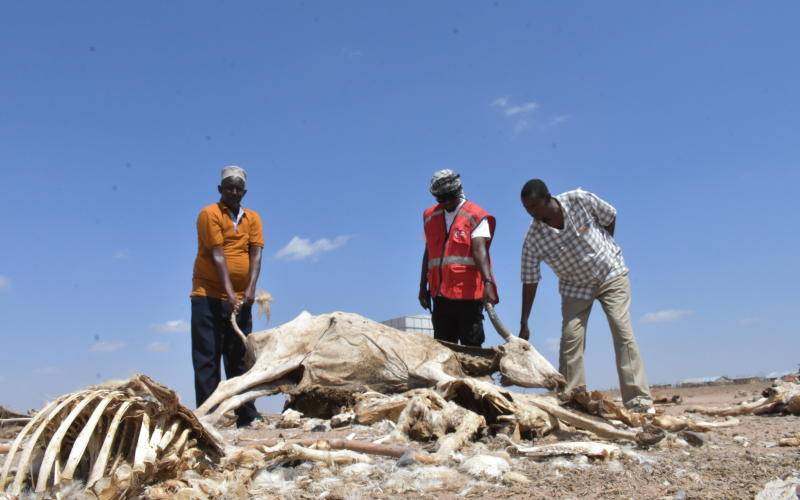
The ongoing drought gripping Kenya’s arid and semi-arid lands (ASAL) is no longer just arural pastoral crisis.In Naivasha, the dry spell has pushed wildlife out of protected areas and into private farms, exposing communities to destruction, fear and mounting losses running into millions of shillings.Villages bordering Mt Longonot and Hell’s Gate National Parks have been the hardest hit as water sources and pastures inside the parks dry up.With survival instincts kicking in, animals have strayed into nearby farms and estates in search of food and water, turning once-productive farmlands into battlegrounds between humans and wildlife.Follow The Standard
channel
on WhatsAppNyamathi village is bearing the brunt of the crisis where tens of buffaloes from Mt Longonot and Kedong Ranch have taken over private farms, destroying crops and leaving residents living in constant fear.“We have lost nearly all our crops. The animals invade our farms almost every evening. Families are terrified,crops have been destroyed, and efforts to get support or compensation from KWS have failed,” said Susan Gatere, one of the affected farmers.Her frustration is shared across the village with residents saying repeated calls for help have yielded little response, even as the invasions become more frequent and aggressive.Peter Njoroge attributed the situation directly to the harsh weather conditions.“These animals are not coming here for fun. They are looking for pasture and water because of the drought. As farmers, we can no longer till our land. If this continues, we are staring at serious food shortages in the coming months,” he said.Fear has reshaped daily life. According to residents, people now rush home before dusk, avoiding farms and footpaths where buffaloes are known to roam.“Many people are going home early for fear of attacks. We are pleading with KWS to come to our rescue before lives are lost,” Njoroge added.The crisis has also spilled into institutions with learning in the semi-arid area has been disrupted as children and teachers fear encountering wild animals on their way to school.“School performance has gone down. Teachers and students report late and leave early to avoidmeeting these animals. We are asking the Nakuru County leadership to help petition the government to act on these perennial invasions,” Joseph Njoroge said, sentiment shared by Monica Wairimu.“Getting basic food has become a challenge because all the crops in the field were destroyed,” she said.A senior Kenya Wildlife Service (KWS) officer, who declined to be named, admitted the scale of the problem, saying more than 50 per cent of wild animals in some areas had relocated to nearby farms in search of water and pasture.Stay informed. Subscribe to our newsletterBy clicking on theSIGN UPbutton, you agree to ourTerms & Conditionsand thePrivacy PolicySIGN UP“There is very little we can do under such extreme conditions,” the officer said.Stay Informed, Stay Empowered: Download the Standard ePaper App!KWS recently led a successful joint air and ground operation to relocate five elephants that had strayed into the Lukenya University community.“The Kenya Wildlife Service (KWS), with support from Tsavo Trust, Kamungi Rangers, and the Lukenya University team, successfully moved five elephants away from Lukenya University,” KWS said.Working with Tsavo Trust, Kamungi Rangers and the university, the animals were safely guidedback to protected areas.“The coordinated operation ensured the safety of students and staff, highlighting the power of partnerships in safeguarding both people and wildlife,” KWS said.Follow The Standard
channel
on WhatsApp
In Naivasha, the dry spell has pushed wildlife out of protected areas and into private farms, exposing communities to destruction, fear and mounting losses running into millions of shillings.Villages bordering Mt Longonot and Hell’s Gate National Parks have been the hardest hit as water sources and pastures inside the parks dry up.With survival instincts kicking in, animals have strayed into nearby farms and estates in search of food and water, turning once-productive farmlands into battlegrounds between humans and wildlife.Follow The Standard
channel
on WhatsAppNyamathi village is bearing the brunt of the crisis where tens of buffaloes from Mt Longonot and Kedong Ranch have taken over private farms, destroying crops and leaving residents living in constant fear.“We have lost nearly all our crops. The animals invade our farms almost every evening. Families are terrified,crops have been destroyed, and efforts to get support or compensation from KWS have failed,” said Susan Gatere, one of the affected farmers.Her frustration is shared across the village with residents saying repeated calls for help have yielded little response, even as the invasions become more frequent and aggressive.Peter Njoroge attributed the situation directly to the harsh weather conditions.“These animals are not coming here for fun. They are looking for pasture and water because of the drought. As farmers, we can no longer till our land. If this continues, we are staring at serious food shortages in the coming months,” he said.Fear has reshaped daily life. According to residents, people now rush home before dusk, avoiding farms and footpaths where buffaloes are known to roam.“Many people are going home early for fear of attacks. We are pleading with KWS to come to our rescue before lives are lost,” Njoroge added.The crisis has also spilled into institutions with learning in the semi-arid area has been disrupted as children and teachers fear encountering wild animals on their way to school.“School performance has gone down. Teachers and students report late and leave early to avoidmeeting these animals. We are asking the Nakuru County leadership to help petition the government to act on these perennial invasions,” Joseph Njoroge said, sentiment shared by Monica Wairimu.“Getting basic food has become a challenge because all the crops in the field were destroyed,” she said.A senior Kenya Wildlife Service (KWS) officer, who declined to be named, admitted the scale of the problem, saying more than 50 per cent of wild animals in some areas had relocated to nearby farms in search of water and pasture.Stay informed. Subscribe to our newsletterBy clicking on theSIGN UPbutton, you agree to ourTerms & Conditionsand thePrivacy PolicySIGN UP“There is very little we can do under such extreme conditions,” the officer said.Stay Informed, Stay Empowered: Download the Standard ePaper App!KWS recently led a successful joint air and ground operation to relocate five elephants that had strayed into the Lukenya University community.“The Kenya Wildlife Service (KWS), with support from Tsavo Trust, Kamungi Rangers, and the Lukenya University team, successfully moved five elephants away from Lukenya University,” KWS said.Working with Tsavo Trust, Kamungi Rangers and the university, the animals were safely guidedback to protected areas.“The coordinated operation ensured the safety of students and staff, highlighting the power of partnerships in safeguarding both people and wildlife,” KWS said.Follow The Standard
channel
on WhatsApp
Villages bordering Mt Longonot and Hell’s Gate National Parks have been the hardest hit as water sources and pastures inside the parks dry up.With survival instincts kicking in, animals have strayed into nearby farms and estates in search of food and water, turning once-productive farmlands into battlegrounds between humans and wildlife.Follow The Standard
channel
on WhatsAppNyamathi village is bearing the brunt of the crisis where tens of buffaloes from Mt Longonot and Kedong Ranch have taken over private farms, destroying crops and leaving residents living in constant fear.“We have lost nearly all our crops. The animals invade our farms almost every evening. Families are terrified,crops have been destroyed, and efforts to get support or compensation from KWS have failed,” said Susan Gatere, one of the affected farmers.Her frustration is shared across the village with residents saying repeated calls for help have yielded little response, even as the invasions become more frequent and aggressive.Peter Njoroge attributed the situation directly to the harsh weather conditions.“These animals are not coming here for fun. They are looking for pasture and water because of the drought. As farmers, we can no longer till our land. If this continues, we are staring at serious food shortages in the coming months,” he said.Fear has reshaped daily life. According to residents, people now rush home before dusk, avoiding farms and footpaths where buffaloes are known to roam.“Many people are going home early for fear of attacks. We are pleading with KWS to come to our rescue before lives are lost,” Njoroge added.The crisis has also spilled into institutions with learning in the semi-arid area has been disrupted as children and teachers fear encountering wild animals on their way to school.“School performance has gone down. Teachers and students report late and leave early to avoidmeeting these animals. We are asking the Nakuru County leadership to help petition the government to act on these perennial invasions,” Joseph Njoroge said, sentiment shared by Monica Wairimu.“Getting basic food has become a challenge because all the crops in the field were destroyed,” she said.A senior Kenya Wildlife Service (KWS) officer, who declined to be named, admitted the scale of the problem, saying more than 50 per cent of wild animals in some areas had relocated to nearby farms in search of water and pasture.Stay informed. Subscribe to our newsletterBy clicking on theSIGN UPbutton, you agree to ourTerms & Conditionsand thePrivacy PolicySIGN UP“There is very little we can do under such extreme conditions,” the officer said.Stay Informed, Stay Empowered: Download the Standard ePaper App!KWS recently led a successful joint air and ground operation to relocate five elephants that had strayed into the Lukenya University community.“The Kenya Wildlife Service (KWS), with support from Tsavo Trust, Kamungi Rangers, and the Lukenya University team, successfully moved five elephants away from Lukenya University,” KWS said.Working with Tsavo Trust, Kamungi Rangers and the university, the animals were safely guidedback to protected areas.“The coordinated operation ensured the safety of students and staff, highlighting the power of partnerships in safeguarding both people and wildlife,” KWS said.Follow The Standard
channel
on WhatsApp
With survival instincts kicking in, animals have strayed into nearby farms and estates in search of food and water, turning once-productive farmlands into battlegrounds between humans and wildlife.Follow The Standard
channel
on WhatsAppNyamathi village is bearing the brunt of the crisis where tens of buffaloes from Mt Longonot and Kedong Ranch have taken over private farms, destroying crops and leaving residents living in constant fear.“We have lost nearly all our crops. The animals invade our farms almost every evening. Families are terrified,crops have been destroyed, and efforts to get support or compensation from KWS have failed,” said Susan Gatere, one of the affected farmers.Her frustration is shared across the village with residents saying repeated calls for help have yielded little response, even as the invasions become more frequent and aggressive.Peter Njoroge attributed the situation directly to the harsh weather conditions.“These animals are not coming here for fun. They are looking for pasture and water because of the drought. As farmers, we can no longer till our land. If this continues, we are staring at serious food shortages in the coming months,” he said.Fear has reshaped daily life. According to residents, people now rush home before dusk, avoiding farms and footpaths where buffaloes are known to roam.“Many people are going home early for fear of attacks. We are pleading with KWS to come to our rescue before lives are lost,” Njoroge added.The crisis has also spilled into institutions with learning in the semi-arid area has been disrupted as children and teachers fear encountering wild animals on their way to school.“School performance has gone down. Teachers and students report late and leave early to avoidmeeting these animals. We are asking the Nakuru County leadership to help petition the government to act on these perennial invasions,” Joseph Njoroge said, sentiment shared by Monica Wairimu.“Getting basic food has become a challenge because all the crops in the field were destroyed,” she said.A senior Kenya Wildlife Service (KWS) officer, who declined to be named, admitted the scale of the problem, saying more than 50 per cent of wild animals in some areas had relocated to nearby farms in search of water and pasture.Stay informed. Subscribe to our newsletterBy clicking on theSIGN UPbutton, you agree to ourTerms & Conditionsand thePrivacy PolicySIGN UP“There is very little we can do under such extreme conditions,” the officer said.Stay Informed, Stay Empowered: Download the Standard ePaper App!KWS recently led a successful joint air and ground operation to relocate five elephants that had strayed into the Lukenya University community.“The Kenya Wildlife Service (KWS), with support from Tsavo Trust, Kamungi Rangers, and the Lukenya University team, successfully moved five elephants away from Lukenya University,” KWS said.Working with Tsavo Trust, Kamungi Rangers and the university, the animals were safely guidedback to protected areas.“The coordinated operation ensured the safety of students and staff, highlighting the power of partnerships in safeguarding both people and wildlife,” KWS said.Follow The Standard
channel
on WhatsApp
Nyamathi village is bearing the brunt of the crisis where tens of buffaloes from Mt Longonot and Kedong Ranch have taken over private farms, destroying crops and leaving residents living in constant fear.“We have lost nearly all our crops. The animals invade our farms almost every evening. Families are terrified,crops have been destroyed, and efforts to get support or compensation from KWS have failed,” said Susan Gatere, one of the affected farmers.Her frustration is shared across the village with residents saying repeated calls for help have yielded little response, even as the invasions become more frequent and aggressive.Peter Njoroge attributed the situation directly to the harsh weather conditions.“These animals are not coming here for fun. They are looking for pasture and water because of the drought. As farmers, we can no longer till our land. If this continues, we are staring at serious food shortages in the coming months,” he said.Fear has reshaped daily life. According to residents, people now rush home before dusk, avoiding farms and footpaths where buffaloes are known to roam.“Many people are going home early for fear of attacks. We are pleading with KWS to come to our rescue before lives are lost,” Njoroge added.The crisis has also spilled into institutions with learning in the semi-arid area has been disrupted as children and teachers fear encountering wild animals on their way to school.“School performance has gone down. Teachers and students report late and leave early to avoidmeeting these animals. We are asking the Nakuru County leadership to help petition the government to act on these perennial invasions,” Joseph Njoroge said, sentiment shared by Monica Wairimu.“Getting basic food has become a challenge because all the crops in the field were destroyed,” she said.A senior Kenya Wildlife Service (KWS) officer, who declined to be named, admitted the scale of the problem, saying more than 50 per cent of wild animals in some areas had relocated to nearby farms in search of water and pasture.Stay informed. Subscribe to our newsletterBy clicking on theSIGN UPbutton, you agree to ourTerms & Conditionsand thePrivacy PolicySIGN UP“There is very little we can do under such extreme conditions,” the officer said.Stay Informed, Stay Empowered: Download the Standard ePaper App!KWS recently led a successful joint air and ground operation to relocate five elephants that had strayed into the Lukenya University community.“The Kenya Wildlife Service (KWS), with support from Tsavo Trust, Kamungi Rangers, and the Lukenya University team, successfully moved five elephants away from Lukenya University,” KWS said.Working with Tsavo Trust, Kamungi Rangers and the university, the animals were safely guidedback to protected areas.“The coordinated operation ensured the safety of students and staff, highlighting the power of partnerships in safeguarding both people and wildlife,” KWS said.Follow The Standard
channel
on WhatsApp
“We have lost nearly all our crops. The animals invade our farms almost every evening. Families are terrified,crops have been destroyed, and efforts to get support or compensation from KWS have failed,” said Susan Gatere, one of the affected farmers.Her frustration is shared across the village with residents saying repeated calls for help have yielded little response, even as the invasions become more frequent and aggressive.Peter Njoroge attributed the situation directly to the harsh weather conditions.“These animals are not coming here for fun. They are looking for pasture and water because of the drought. As farmers, we can no longer till our land. If this continues, we are staring at serious food shortages in the coming months,” he said.Fear has reshaped daily life. According to residents, people now rush home before dusk, avoiding farms and footpaths where buffaloes are known to roam.“Many people are going home early for fear of attacks. We are pleading with KWS to come to our rescue before lives are lost,” Njoroge added.The crisis has also spilled into institutions with learning in the semi-arid area has been disrupted as children and teachers fear encountering wild animals on their way to school.“School performance has gone down. Teachers and students report late and leave early to avoidmeeting these animals. We are asking the Nakuru County leadership to help petition the government to act on these perennial invasions,” Joseph Njoroge said, sentiment shared by Monica Wairimu.“Getting basic food has become a challenge because all the crops in the field were destroyed,” she said.A senior Kenya Wildlife Service (KWS) officer, who declined to be named, admitted the scale of the problem, saying more than 50 per cent of wild animals in some areas had relocated to nearby farms in search of water and pasture.Stay informed. Subscribe to our newsletterBy clicking on theSIGN UPbutton, you agree to ourTerms & Conditionsand thePrivacy PolicySIGN UP“There is very little we can do under such extreme conditions,” the officer said.Stay Informed, Stay Empowered: Download the Standard ePaper App!KWS recently led a successful joint air and ground operation to relocate five elephants that had strayed into the Lukenya University community.“The Kenya Wildlife Service (KWS), with support from Tsavo Trust, Kamungi Rangers, and the Lukenya University team, successfully moved five elephants away from Lukenya University,” KWS said.Working with Tsavo Trust, Kamungi Rangers and the university, the animals were safely guidedback to protected areas.“The coordinated operation ensured the safety of students and staff, highlighting the power of partnerships in safeguarding both people and wildlife,” KWS said.Follow The Standard
channel
on WhatsApp
Her frustration is shared across the village with residents saying repeated calls for help have yielded little response, even as the invasions become more frequent and aggressive.Peter Njoroge attributed the situation directly to the harsh weather conditions.“These animals are not coming here for fun. They are looking for pasture and water because of the drought. As farmers, we can no longer till our land. If this continues, we are staring at serious food shortages in the coming months,” he said.Fear has reshaped daily life. According to residents, people now rush home before dusk, avoiding farms and footpaths where buffaloes are known to roam.“Many people are going home early for fear of attacks. We are pleading with KWS to come to our rescue before lives are lost,” Njoroge added.The crisis has also spilled into institutions with learning in the semi-arid area has been disrupted as children and teachers fear encountering wild animals on their way to school.“School performance has gone down. Teachers and students report late and leave early to avoidmeeting these animals. We are asking the Nakuru County leadership to help petition the government to act on these perennial invasions,” Joseph Njoroge said, sentiment shared by Monica Wairimu.“Getting basic food has become a challenge because all the crops in the field were destroyed,” she said.A senior Kenya Wildlife Service (KWS) officer, who declined to be named, admitted the scale of the problem, saying more than 50 per cent of wild animals in some areas had relocated to nearby farms in search of water and pasture.Stay informed. Subscribe to our newsletterBy clicking on theSIGN UPbutton, you agree to ourTerms & Conditionsand thePrivacy PolicySIGN UP“There is very little we can do under such extreme conditions,” the officer said.Stay Informed, Stay Empowered: Download the Standard ePaper App!KWS recently led a successful joint air and ground operation to relocate five elephants that had strayed into the Lukenya University community.“The Kenya Wildlife Service (KWS), with support from Tsavo Trust, Kamungi Rangers, and the Lukenya University team, successfully moved five elephants away from Lukenya University,” KWS said.Working with Tsavo Trust, Kamungi Rangers and the university, the animals were safely guidedback to protected areas.“The coordinated operation ensured the safety of students and staff, highlighting the power of partnerships in safeguarding both people and wildlife,” KWS said.Follow The Standard
channel
on WhatsApp
Peter Njoroge attributed the situation directly to the harsh weather conditions.“These animals are not coming here for fun. They are looking for pasture and water because of the drought. As farmers, we can no longer till our land. If this continues, we are staring at serious food shortages in the coming months,” he said.Fear has reshaped daily life. According to residents, people now rush home before dusk, avoiding farms and footpaths where buffaloes are known to roam.“Many people are going home early for fear of attacks. We are pleading with KWS to come to our rescue before lives are lost,” Njoroge added.The crisis has also spilled into institutions with learning in the semi-arid area has been disrupted as children and teachers fear encountering wild animals on their way to school.“School performance has gone down. Teachers and students report late and leave early to avoidmeeting these animals. We are asking the Nakuru County leadership to help petition the government to act on these perennial invasions,” Joseph Njoroge said, sentiment shared by Monica Wairimu.“Getting basic food has become a challenge because all the crops in the field were destroyed,” she said.A senior Kenya Wildlife Service (KWS) officer, who declined to be named, admitted the scale of the problem, saying more than 50 per cent of wild animals in some areas had relocated to nearby farms in search of water and pasture.Stay informed. Subscribe to our newsletterBy clicking on theSIGN UPbutton, you agree to ourTerms & Conditionsand thePrivacy PolicySIGN UP“There is very little we can do under such extreme conditions,” the officer said.Stay Informed, Stay Empowered: Download the Standard ePaper App!KWS recently led a successful joint air and ground operation to relocate five elephants that had strayed into the Lukenya University community.“The Kenya Wildlife Service (KWS), with support from Tsavo Trust, Kamungi Rangers, and the Lukenya University team, successfully moved five elephants away from Lukenya University,” KWS said.Working with Tsavo Trust, Kamungi Rangers and the university, the animals were safely guidedback to protected areas.“The coordinated operation ensured the safety of students and staff, highlighting the power of partnerships in safeguarding both people and wildlife,” KWS said.Follow The Standard
channel
on WhatsApp
“These animals are not coming here for fun. They are looking for pasture and water because of the drought. As farmers, we can no longer till our land. If this continues, we are staring at serious food shortages in the coming months,” he said.Fear has reshaped daily life. According to residents, people now rush home before dusk, avoiding farms and footpaths where buffaloes are known to roam.“Many people are going home early for fear of attacks. We are pleading with KWS to come to our rescue before lives are lost,” Njoroge added.The crisis has also spilled into institutions with learning in the semi-arid area has been disrupted as children and teachers fear encountering wild animals on their way to school.“School performance has gone down. Teachers and students report late and leave early to avoidmeeting these animals. We are asking the Nakuru County leadership to help petition the government to act on these perennial invasions,” Joseph Njoroge said, sentiment shared by Monica Wairimu.“Getting basic food has become a challenge because all the crops in the field were destroyed,” she said.A senior Kenya Wildlife Service (KWS) officer, who declined to be named, admitted the scale of the problem, saying more than 50 per cent of wild animals in some areas had relocated to nearby farms in search of water and pasture.Stay informed. Subscribe to our newsletterBy clicking on theSIGN UPbutton, you agree to ourTerms & Conditionsand thePrivacy PolicySIGN UP“There is very little we can do under such extreme conditions,” the officer said.Stay Informed, Stay Empowered: Download the Standard ePaper App!KWS recently led a successful joint air and ground operation to relocate five elephants that had strayed into the Lukenya University community.“The Kenya Wildlife Service (KWS), with support from Tsavo Trust, Kamungi Rangers, and the Lukenya University team, successfully moved five elephants away from Lukenya University,” KWS said.Working with Tsavo Trust, Kamungi Rangers and the university, the animals were safely guidedback to protected areas.“The coordinated operation ensured the safety of students and staff, highlighting the power of partnerships in safeguarding both people and wildlife,” KWS said.Follow The Standard
channel
on WhatsApp
Fear has reshaped daily life. According to residents, people now rush home before dusk, avoiding farms and footpaths where buffaloes are known to roam.“Many people are going home early for fear of attacks. We are pleading with KWS to come to our rescue before lives are lost,” Njoroge added.The crisis has also spilled into institutions with learning in the semi-arid area has been disrupted as children and teachers fear encountering wild animals on their way to school.“School performance has gone down. Teachers and students report late and leave early to avoidmeeting these animals. We are asking the Nakuru County leadership to help petition the government to act on these perennial invasions,” Joseph Njoroge said, sentiment shared by Monica Wairimu.“Getting basic food has become a challenge because all the crops in the field were destroyed,” she said.A senior Kenya Wildlife Service (KWS) officer, who declined to be named, admitted the scale of the problem, saying more than 50 per cent of wild animals in some areas had relocated to nearby farms in search of water and pasture.Stay informed. Subscribe to our newsletterBy clicking on theSIGN UPbutton, you agree to ourTerms & Conditionsand thePrivacy PolicySIGN UP“There is very little we can do under such extreme conditions,” the officer said.Stay Informed, Stay Empowered: Download the Standard ePaper App!KWS recently led a successful joint air and ground operation to relocate five elephants that had strayed into the Lukenya University community.“The Kenya Wildlife Service (KWS), with support from Tsavo Trust, Kamungi Rangers, and the Lukenya University team, successfully moved five elephants away from Lukenya University,” KWS said.Working with Tsavo Trust, Kamungi Rangers and the university, the animals were safely guidedback to protected areas.“The coordinated operation ensured the safety of students and staff, highlighting the power of partnerships in safeguarding both people and wildlife,” KWS said.Follow The Standard
channel
on WhatsApp
“Many people are going home early for fear of attacks. We are pleading with KWS to come to our rescue before lives are lost,” Njoroge added.The crisis has also spilled into institutions with learning in the semi-arid area has been disrupted as children and teachers fear encountering wild animals on their way to school.“School performance has gone down. Teachers and students report late and leave early to avoidmeeting these animals. We are asking the Nakuru County leadership to help petition the government to act on these perennial invasions,” Joseph Njoroge said, sentiment shared by Monica Wairimu.“Getting basic food has become a challenge because all the crops in the field were destroyed,” she said.A senior Kenya Wildlife Service (KWS) officer, who declined to be named, admitted the scale of the problem, saying more than 50 per cent of wild animals in some areas had relocated to nearby farms in search of water and pasture.Stay informed. Subscribe to our newsletterBy clicking on theSIGN UPbutton, you agree to ourTerms & Conditionsand thePrivacy PolicySIGN UP“There is very little we can do under such extreme conditions,” the officer said.Stay Informed, Stay Empowered: Download the Standard ePaper App!KWS recently led a successful joint air and ground operation to relocate five elephants that had strayed into the Lukenya University community.“The Kenya Wildlife Service (KWS), with support from Tsavo Trust, Kamungi Rangers, and the Lukenya University team, successfully moved five elephants away from Lukenya University,” KWS said.Working with Tsavo Trust, Kamungi Rangers and the university, the animals were safely guidedback to protected areas.“The coordinated operation ensured the safety of students and staff, highlighting the power of partnerships in safeguarding both people and wildlife,” KWS said.Follow The Standard
channel
on WhatsApp
The crisis has also spilled into institutions with learning in the semi-arid area has been disrupted as children and teachers fear encountering wild animals on their way to school.“School performance has gone down. Teachers and students report late and leave early to avoidmeeting these animals. We are asking the Nakuru County leadership to help petition the government to act on these perennial invasions,” Joseph Njoroge said, sentiment shared by Monica Wairimu.“Getting basic food has become a challenge because all the crops in the field were destroyed,” she said.A senior Kenya Wildlife Service (KWS) officer, who declined to be named, admitted the scale of the problem, saying more than 50 per cent of wild animals in some areas had relocated to nearby farms in search of water and pasture.Stay informed. Subscribe to our newsletterBy clicking on theSIGN UPbutton, you agree to ourTerms & Conditionsand thePrivacy PolicySIGN UP“There is very little we can do under such extreme conditions,” the officer said.Stay Informed, Stay Empowered: Download the Standard ePaper App!KWS recently led a successful joint air and ground operation to relocate five elephants that had strayed into the Lukenya University community.“The Kenya Wildlife Service (KWS), with support from Tsavo Trust, Kamungi Rangers, and the Lukenya University team, successfully moved five elephants away from Lukenya University,” KWS said.Working with Tsavo Trust, Kamungi Rangers and the university, the animals were safely guidedback to protected areas.“The coordinated operation ensured the safety of students and staff, highlighting the power of partnerships in safeguarding both people and wildlife,” KWS said.Follow The Standard
channel
on WhatsApp
“School performance has gone down. Teachers and students report late and leave early to avoidmeeting these animals. We are asking the Nakuru County leadership to help petition the government to act on these perennial invasions,” Joseph Njoroge said, sentiment shared by Monica Wairimu.“Getting basic food has become a challenge because all the crops in the field were destroyed,” she said.A senior Kenya Wildlife Service (KWS) officer, who declined to be named, admitted the scale of the problem, saying more than 50 per cent of wild animals in some areas had relocated to nearby farms in search of water and pasture.Stay informed. Subscribe to our newsletterBy clicking on theSIGN UPbutton, you agree to ourTerms & Conditionsand thePrivacy PolicySIGN UP“There is very little we can do under such extreme conditions,” the officer said.Stay Informed, Stay Empowered: Download the Standard ePaper App!KWS recently led a successful joint air and ground operation to relocate five elephants that had strayed into the Lukenya University community.“The Kenya Wildlife Service (KWS), with support from Tsavo Trust, Kamungi Rangers, and the Lukenya University team, successfully moved five elephants away from Lukenya University,” KWS said.Working with Tsavo Trust, Kamungi Rangers and the university, the animals were safely guidedback to protected areas.“The coordinated operation ensured the safety of students and staff, highlighting the power of partnerships in safeguarding both people and wildlife,” KWS said.Follow The Standard
channel
on WhatsApp
“Getting basic food has become a challenge because all the crops in the field were destroyed,” she said.A senior Kenya Wildlife Service (KWS) officer, who declined to be named, admitted the scale of the problem, saying more than 50 per cent of wild animals in some areas had relocated to nearby farms in search of water and pasture.Stay informed. Subscribe to our newsletterBy clicking on theSIGN UPbutton, you agree to ourTerms & Conditionsand thePrivacy PolicySIGN UP“There is very little we can do under such extreme conditions,” the officer said.Stay Informed, Stay Empowered: Download the Standard ePaper App!KWS recently led a successful joint air and ground operation to relocate five elephants that had strayed into the Lukenya University community.“The Kenya Wildlife Service (KWS), with support from Tsavo Trust, Kamungi Rangers, and the Lukenya University team, successfully moved five elephants away from Lukenya University,” KWS said.Working with Tsavo Trust, Kamungi Rangers and the university, the animals were safely guidedback to protected areas.“The coordinated operation ensured the safety of students and staff, highlighting the power of partnerships in safeguarding both people and wildlife,” KWS said.Follow The Standard
channel
on WhatsApp
A senior Kenya Wildlife Service (KWS) officer, who declined to be named, admitted the scale of the problem, saying more than 50 per cent of wild animals in some areas had relocated to nearby farms in search of water and pasture.Stay informed. Subscribe to our newsletterBy clicking on theSIGN UPbutton, you agree to ourTerms & Conditionsand thePrivacy PolicySIGN UP“There is very little we can do under such extreme conditions,” the officer said.Stay Informed, Stay Empowered: Download the Standard ePaper App!KWS recently led a successful joint air and ground operation to relocate five elephants that had strayed into the Lukenya University community.“The Kenya Wildlife Service (KWS), with support from Tsavo Trust, Kamungi Rangers, and the Lukenya University team, successfully moved five elephants away from Lukenya University,” KWS said.Working with Tsavo Trust, Kamungi Rangers and the university, the animals were safely guidedback to protected areas.“The coordinated operation ensured the safety of students and staff, highlighting the power of partnerships in safeguarding both people and wildlife,” KWS said.Follow The Standard
channel
on WhatsApp
“There is very little we can do under such extreme conditions,” the officer said.Stay Informed, Stay Empowered: Download the Standard ePaper App!KWS recently led a successful joint air and ground operation to relocate five elephants that had strayed into the Lukenya University community.“The Kenya Wildlife Service (KWS), with support from Tsavo Trust, Kamungi Rangers, and the Lukenya University team, successfully moved five elephants away from Lukenya University,” KWS said.Working with Tsavo Trust, Kamungi Rangers and the university, the animals were safely guidedback to protected areas.“The coordinated operation ensured the safety of students and staff, highlighting the power of partnerships in safeguarding both people and wildlife,” KWS said.Follow The Standard
channel
on WhatsApp
KWS recently led a successful joint air and ground operation to relocate five elephants that had strayed into the Lukenya University community.“The Kenya Wildlife Service (KWS), with support from Tsavo Trust, Kamungi Rangers, and the Lukenya University team, successfully moved five elephants away from Lukenya University,” KWS said.Working with Tsavo Trust, Kamungi Rangers and the university, the animals were safely guidedback to protected areas.“The coordinated operation ensured the safety of students and staff, highlighting the power of partnerships in safeguarding both people and wildlife,” KWS said.Follow The Standard
channel
on WhatsApp
“The Kenya Wildlife Service (KWS), with support from Tsavo Trust, Kamungi Rangers, and the Lukenya University team, successfully moved five elephants away from Lukenya University,” KWS said.Working with Tsavo Trust, Kamungi Rangers and the university, the animals were safely guidedback to protected areas.“The coordinated operation ensured the safety of students and staff, highlighting the power of partnerships in safeguarding both people and wildlife,” KWS said.Follow The Standard
channel
on WhatsApp
Working with Tsavo Trust, Kamungi Rangers and the university, the animals were safely guidedback to protected areas.“The coordinated operation ensured the safety of students and staff, highlighting the power of partnerships in safeguarding both people and wildlife,” KWS said.Follow The Standard
channel
on WhatsApp
“The coordinated operation ensured the safety of students and staff, highlighting the power of partnerships in safeguarding both people and wildlife,” KWS said.Follow The Standard
channel
on WhatsApp
Subscribe to our newsletter and stay updated on the latest developments and special
offers!
Pick your favourite topics below for a tailor made homepage just for you