
40,000 Kenyan farmers to benefit from Sh600 million agroecological project
Source: The Standard
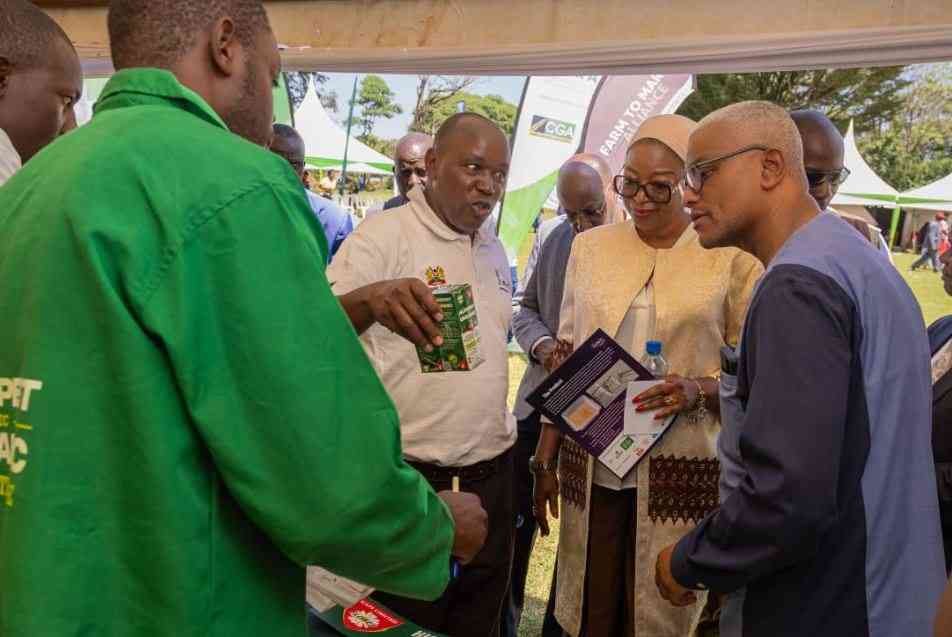
The government, in collaboration with the International Fund for Agricultural Development (IFAD), has rolled out a program seeking to empower at least 40,000 smallholder farmers from six counties on modern agroecological practices to boost production in Kenya.Under this project, smallholder farmers will receive certified assorted seeds, fertilizer, agro-ecological inputs and services, soil testing, and post-harvest materials.The three-year Sh600 million grant project funded by the European Union is also meant to mitigate the continued effects of climate change and environmental degradation.The Project that will be implemented by the government of Kenya through the Ministry of Agriculture targets smallholder farmers from Embu, Kakamega, Kilifi, Makueni, Taita Taveta nad Trans Nzoia counties.Follow The Standard
channel
on WhatsAppThe smallholder farmers are expected to increase the productivity of value chains of maize, sorghum, beans, green grams, cowpeas, and potato production.IFAD country director to Kenya Mariatu Kamara said agriculture and food systems in Kenya were continuing to face increasing pressure from climate, environmental degradation, declining soil fertility, biodiversity loss, and the impact of global geopolitical events.“These challenges directly affect productivity, food nutrition, and security, as well as the resilience of rural livelihoods. It is in the response to these realities that the European Union (EU) is financing a global initiative on food production and resilience of food systems in African, Caribbean, and Pacific countries,” she said.She noted that through this project, the smallholder farmers will also benefit from access to sustainable bio inputs and agroecological services through digital e-voucher systems supporting the local private sector and job creation.According to the IFAD director, the small holder farmers will also benefit from strengthened extension services, enhanced policy and institutional coordination on agro ecology at both national and county levels.Secretary of Administration in Kenya’s state department of agriculture, Rashid Kharter, said that the implementation of this project is in line with the government aspirations of transforming agriculture to a more commercially driven enterprise as a vehicle to drive the country to a middle-level industrialised state.He noted that this is one of the initiatives that the government has to ensure farmers are able to get full production from their lands.Mr Kharter said that age was not a barrier in the project and urged all farmers to work together, as the government intends to provide the right facilities and environment to ensure they achieve the objective, which is to ensure the country can feed itself and cut off the importation of food.“The program rides on the successful rollout of the initial EU-funded grant support. We will get to the ground to ensure positive results are achieved through this program,” he said.Follow The Standard
channel
on WhatsApp
Under this project, smallholder farmers will receive certified assorted seeds, fertilizer, agro-ecological inputs and services, soil testing, and post-harvest materials.The three-year Sh600 million grant project funded by the European Union is also meant to mitigate the continued effects of climate change and environmental degradation.The Project that will be implemented by the government of Kenya through the Ministry of Agriculture targets smallholder farmers from Embu, Kakamega, Kilifi, Makueni, Taita Taveta nad Trans Nzoia counties.Follow The Standard
channel
on WhatsAppThe smallholder farmers are expected to increase the productivity of value chains of maize, sorghum, beans, green grams, cowpeas, and potato production.IFAD country director to Kenya Mariatu Kamara said agriculture and food systems in Kenya were continuing to face increasing pressure from climate, environmental degradation, declining soil fertility, biodiversity loss, and the impact of global geopolitical events.“These challenges directly affect productivity, food nutrition, and security, as well as the resilience of rural livelihoods. It is in the response to these realities that the European Union (EU) is financing a global initiative on food production and resilience of food systems in African, Caribbean, and Pacific countries,” she said.She noted that through this project, the smallholder farmers will also benefit from access to sustainable bio inputs and agroecological services through digital e-voucher systems supporting the local private sector and job creation.According to the IFAD director, the small holder farmers will also benefit from strengthened extension services, enhanced policy and institutional coordination on agro ecology at both national and county levels.Secretary of Administration in Kenya’s state department of agriculture, Rashid Kharter, said that the implementation of this project is in line with the government aspirations of transforming agriculture to a more commercially driven enterprise as a vehicle to drive the country to a middle-level industrialised state.He noted that this is one of the initiatives that the government has to ensure farmers are able to get full production from their lands.Mr Kharter said that age was not a barrier in the project and urged all farmers to work together, as the government intends to provide the right facilities and environment to ensure they achieve the objective, which is to ensure the country can feed itself and cut off the importation of food.“The program rides on the successful rollout of the initial EU-funded grant support. We will get to the ground to ensure positive results are achieved through this program,” he said.Follow The Standard
channel
on WhatsApp
The three-year Sh600 million grant project funded by the European Union is also meant to mitigate the continued effects of climate change and environmental degradation.The Project that will be implemented by the government of Kenya through the Ministry of Agriculture targets smallholder farmers from Embu, Kakamega, Kilifi, Makueni, Taita Taveta nad Trans Nzoia counties.Follow The Standard
channel
on WhatsAppThe smallholder farmers are expected to increase the productivity of value chains of maize, sorghum, beans, green grams, cowpeas, and potato production.IFAD country director to Kenya Mariatu Kamara said agriculture and food systems in Kenya were continuing to face increasing pressure from climate, environmental degradation, declining soil fertility, biodiversity loss, and the impact of global geopolitical events.“These challenges directly affect productivity, food nutrition, and security, as well as the resilience of rural livelihoods. It is in the response to these realities that the European Union (EU) is financing a global initiative on food production and resilience of food systems in African, Caribbean, and Pacific countries,” she said.She noted that through this project, the smallholder farmers will also benefit from access to sustainable bio inputs and agroecological services through digital e-voucher systems supporting the local private sector and job creation.According to the IFAD director, the small holder farmers will also benefit from strengthened extension services, enhanced policy and institutional coordination on agro ecology at both national and county levels.Secretary of Administration in Kenya’s state department of agriculture, Rashid Kharter, said that the implementation of this project is in line with the government aspirations of transforming agriculture to a more commercially driven enterprise as a vehicle to drive the country to a middle-level industrialised state.He noted that this is one of the initiatives that the government has to ensure farmers are able to get full production from their lands.Mr Kharter said that age was not a barrier in the project and urged all farmers to work together, as the government intends to provide the right facilities and environment to ensure they achieve the objective, which is to ensure the country can feed itself and cut off the importation of food.“The program rides on the successful rollout of the initial EU-funded grant support. We will get to the ground to ensure positive results are achieved through this program,” he said.Follow The Standard
channel
on WhatsApp
The Project that will be implemented by the government of Kenya through the Ministry of Agriculture targets smallholder farmers from Embu, Kakamega, Kilifi, Makueni, Taita Taveta nad Trans Nzoia counties.Follow The Standard
channel
on WhatsAppThe smallholder farmers are expected to increase the productivity of value chains of maize, sorghum, beans, green grams, cowpeas, and potato production.IFAD country director to Kenya Mariatu Kamara said agriculture and food systems in Kenya were continuing to face increasing pressure from climate, environmental degradation, declining soil fertility, biodiversity loss, and the impact of global geopolitical events.“These challenges directly affect productivity, food nutrition, and security, as well as the resilience of rural livelihoods. It is in the response to these realities that the European Union (EU) is financing a global initiative on food production and resilience of food systems in African, Caribbean, and Pacific countries,” she said.She noted that through this project, the smallholder farmers will also benefit from access to sustainable bio inputs and agroecological services through digital e-voucher systems supporting the local private sector and job creation.According to the IFAD director, the small holder farmers will also benefit from strengthened extension services, enhanced policy and institutional coordination on agro ecology at both national and county levels.Secretary of Administration in Kenya’s state department of agriculture, Rashid Kharter, said that the implementation of this project is in line with the government aspirations of transforming agriculture to a more commercially driven enterprise as a vehicle to drive the country to a middle-level industrialised state.He noted that this is one of the initiatives that the government has to ensure farmers are able to get full production from their lands.Mr Kharter said that age was not a barrier in the project and urged all farmers to work together, as the government intends to provide the right facilities and environment to ensure they achieve the objective, which is to ensure the country can feed itself and cut off the importation of food.“The program rides on the successful rollout of the initial EU-funded grant support. We will get to the ground to ensure positive results are achieved through this program,” he said.Follow The Standard
channel
on WhatsApp
The smallholder farmers are expected to increase the productivity of value chains of maize, sorghum, beans, green grams, cowpeas, and potato production.IFAD country director to Kenya Mariatu Kamara said agriculture and food systems in Kenya were continuing to face increasing pressure from climate, environmental degradation, declining soil fertility, biodiversity loss, and the impact of global geopolitical events.“These challenges directly affect productivity, food nutrition, and security, as well as the resilience of rural livelihoods. It is in the response to these realities that the European Union (EU) is financing a global initiative on food production and resilience of food systems in African, Caribbean, and Pacific countries,” she said.She noted that through this project, the smallholder farmers will also benefit from access to sustainable bio inputs and agroecological services through digital e-voucher systems supporting the local private sector and job creation.According to the IFAD director, the small holder farmers will also benefit from strengthened extension services, enhanced policy and institutional coordination on agro ecology at both national and county levels.Secretary of Administration in Kenya’s state department of agriculture, Rashid Kharter, said that the implementation of this project is in line with the government aspirations of transforming agriculture to a more commercially driven enterprise as a vehicle to drive the country to a middle-level industrialised state.He noted that this is one of the initiatives that the government has to ensure farmers are able to get full production from their lands.Mr Kharter said that age was not a barrier in the project and urged all farmers to work together, as the government intends to provide the right facilities and environment to ensure they achieve the objective, which is to ensure the country can feed itself and cut off the importation of food.“The program rides on the successful rollout of the initial EU-funded grant support. We will get to the ground to ensure positive results are achieved through this program,” he said.Follow The Standard
channel
on WhatsApp
IFAD country director to Kenya Mariatu Kamara said agriculture and food systems in Kenya were continuing to face increasing pressure from climate, environmental degradation, declining soil fertility, biodiversity loss, and the impact of global geopolitical events.“These challenges directly affect productivity, food nutrition, and security, as well as the resilience of rural livelihoods. It is in the response to these realities that the European Union (EU) is financing a global initiative on food production and resilience of food systems in African, Caribbean, and Pacific countries,” she said.She noted that through this project, the smallholder farmers will also benefit from access to sustainable bio inputs and agroecological services through digital e-voucher systems supporting the local private sector and job creation.According to the IFAD director, the small holder farmers will also benefit from strengthened extension services, enhanced policy and institutional coordination on agro ecology at both national and county levels.Secretary of Administration in Kenya’s state department of agriculture, Rashid Kharter, said that the implementation of this project is in line with the government aspirations of transforming agriculture to a more commercially driven enterprise as a vehicle to drive the country to a middle-level industrialised state.He noted that this is one of the initiatives that the government has to ensure farmers are able to get full production from their lands.Mr Kharter said that age was not a barrier in the project and urged all farmers to work together, as the government intends to provide the right facilities and environment to ensure they achieve the objective, which is to ensure the country can feed itself and cut off the importation of food.“The program rides on the successful rollout of the initial EU-funded grant support. We will get to the ground to ensure positive results are achieved through this program,” he said.Follow The Standard
channel
on WhatsApp
“These challenges directly affect productivity, food nutrition, and security, as well as the resilience of rural livelihoods. It is in the response to these realities that the European Union (EU) is financing a global initiative on food production and resilience of food systems in African, Caribbean, and Pacific countries,” she said.She noted that through this project, the smallholder farmers will also benefit from access to sustainable bio inputs and agroecological services through digital e-voucher systems supporting the local private sector and job creation.According to the IFAD director, the small holder farmers will also benefit from strengthened extension services, enhanced policy and institutional coordination on agro ecology at both national and county levels.Secretary of Administration in Kenya’s state department of agriculture, Rashid Kharter, said that the implementation of this project is in line with the government aspirations of transforming agriculture to a more commercially driven enterprise as a vehicle to drive the country to a middle-level industrialised state.He noted that this is one of the initiatives that the government has to ensure farmers are able to get full production from their lands.Mr Kharter said that age was not a barrier in the project and urged all farmers to work together, as the government intends to provide the right facilities and environment to ensure they achieve the objective, which is to ensure the country can feed itself and cut off the importation of food.“The program rides on the successful rollout of the initial EU-funded grant support. We will get to the ground to ensure positive results are achieved through this program,” he said.Follow The Standard
channel
on WhatsApp
She noted that through this project, the smallholder farmers will also benefit from access to sustainable bio inputs and agroecological services through digital e-voucher systems supporting the local private sector and job creation.According to the IFAD director, the small holder farmers will also benefit from strengthened extension services, enhanced policy and institutional coordination on agro ecology at both national and county levels.Secretary of Administration in Kenya’s state department of agriculture, Rashid Kharter, said that the implementation of this project is in line with the government aspirations of transforming agriculture to a more commercially driven enterprise as a vehicle to drive the country to a middle-level industrialised state.He noted that this is one of the initiatives that the government has to ensure farmers are able to get full production from their lands.Mr Kharter said that age was not a barrier in the project and urged all farmers to work together, as the government intends to provide the right facilities and environment to ensure they achieve the objective, which is to ensure the country can feed itself and cut off the importation of food.“The program rides on the successful rollout of the initial EU-funded grant support. We will get to the ground to ensure positive results are achieved through this program,” he said.Follow The Standard
channel
on WhatsApp
According to the IFAD director, the small holder farmers will also benefit from strengthened extension services, enhanced policy and institutional coordination on agro ecology at both national and county levels.Secretary of Administration in Kenya’s state department of agriculture, Rashid Kharter, said that the implementation of this project is in line with the government aspirations of transforming agriculture to a more commercially driven enterprise as a vehicle to drive the country to a middle-level industrialised state.He noted that this is one of the initiatives that the government has to ensure farmers are able to get full production from their lands.Mr Kharter said that age was not a barrier in the project and urged all farmers to work together, as the government intends to provide the right facilities and environment to ensure they achieve the objective, which is to ensure the country can feed itself and cut off the importation of food.“The program rides on the successful rollout of the initial EU-funded grant support. We will get to the ground to ensure positive results are achieved through this program,” he said.Follow The Standard
channel
on WhatsApp
Secretary of Administration in Kenya’s state department of agriculture, Rashid Kharter, said that the implementation of this project is in line with the government aspirations of transforming agriculture to a more commercially driven enterprise as a vehicle to drive the country to a middle-level industrialised state.He noted that this is one of the initiatives that the government has to ensure farmers are able to get full production from their lands.Mr Kharter said that age was not a barrier in the project and urged all farmers to work together, as the government intends to provide the right facilities and environment to ensure they achieve the objective, which is to ensure the country can feed itself and cut off the importation of food.“The program rides on the successful rollout of the initial EU-funded grant support. We will get to the ground to ensure positive results are achieved through this program,” he said.Follow The Standard
channel
on WhatsApp
He noted that this is one of the initiatives that the government has to ensure farmers are able to get full production from their lands.Mr Kharter said that age was not a barrier in the project and urged all farmers to work together, as the government intends to provide the right facilities and environment to ensure they achieve the objective, which is to ensure the country can feed itself and cut off the importation of food.“The program rides on the successful rollout of the initial EU-funded grant support. We will get to the ground to ensure positive results are achieved through this program,” he said.Follow The Standard
channel
on WhatsApp
Mr Kharter said that age was not a barrier in the project and urged all farmers to work together, as the government intends to provide the right facilities and environment to ensure they achieve the objective, which is to ensure the country can feed itself and cut off the importation of food.“The program rides on the successful rollout of the initial EU-funded grant support. We will get to the ground to ensure positive results are achieved through this program,” he said.Follow The Standard
channel
on WhatsApp
“The program rides on the successful rollout of the initial EU-funded grant support. We will get to the ground to ensure positive results are achieved through this program,” he said.Follow The Standard
channel
on WhatsApp
Subscribe to our newsletter and stay updated on the latest developments and special
offers!
Pick your favourite topics below for a tailor made homepage just for you